

Performance Physical Therapy in Little Silver: A Complete Guide to Recovery, Strength, and Sport Performance
You train hard, stay active, and expect your body to keep up. Then a nagging shoulder, a tight hip, or a stubborn plateau gets in the way. Many active adults in Monmouth County are told to rest, wait it out, or settle for being pain-free. That is rarely what you actually want.
You want to return to your sport or workout and feel stronger than before. Performance physical therapy is built for that goal. This guide explains what it is, who it helps, which tools and tests it uses, and what to expect when you work with R3 Physio in Little Silver.
What Is Performance Physical Therapy?
Performance physical therapy combines injury rehabilitation with the training principles used in sports performance. It treats the problem that brought you in, then keeps going. The aim is to improve how you move, build the strength your activity demands, and lower the chance that the injury returns.
Traditional rehab often ends when pain settles and daily tasks feel manageable. If you run, lift, play sports, or simply want to stay active for decades, that finish line can be too early. Performance care continues until your body can handle the work you want to do.
How Performance PT Differs From Traditional Physical Therapy
The differences show up in the goals and the process:
Goal: Traditional care restores basic function. Performance care aims to restore your sport, workout, or lifestyle at a high level.
Timing: Many people only seek care after an injury. Performance care also supports prehab and injury prevention before problems start.
Focus: Instead of only treating the painful area, a performance approach looks at how the whole body moves and loads.
Progression: Rehab flows into strength training, plyometrics, and sport-specific drills rather than stopping at pain relief.
Who Benefits From Performance Physical Therapy?
You do not need to be a competitive athlete. If you value being active and want to protect that ability, this approach fits. R3 Physio works with a wide range of individuals across Little Silver, Shrewsbury, Rumson, Fair Haven, Red Bank, and Middletown.
Runners, Lifters, and Weekend Warriors
If you are active and training regularly, you probably know the frustration of working around a persistent ache. Runners deal with knee, shin, Achilles, and foot pain. Lifters often struggle with shoulder, low back, and hip issues. Weekend athletes can feel fine until one pickup game or race exposes a weak link.
A performance plan identifies why the problem keeps returning and addresses the root cause. That is how you return to activity stronger, not just pain-free.
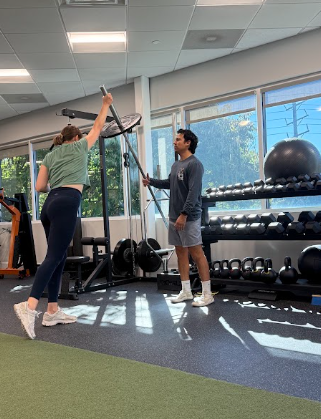
Adolescents Starting Strength Training
Teen athletes are growing, competing at higher levels, and often training without structured guidance. R3 Physio supports youth sports performance for adolescents in a safe, supervised environment. The focus is on movement quality, technique, and building a foundation that supports sport and helps reduce injury risk during growth.
Older Adults Who Want to Stay Strong and Independent
Muscle mass and strength naturally decline with age, and that can affect balance, confidence, and independence. Resistance training is widely recommended for older adults for these reasons. R3 Physio provides strength programs for older adults with careful supervision, along with balance and mobility work that supports healthy aging.
How Movement Assessments Find the Root Cause of Pain
Pain is often the place where a problem shows up, not where it starts. A sore knee may be linked to hip strength, ankle mobility, or how you land when you run. Treating only the painful spot can bring short-term relief, but the problem often returns.
That is why your care at R3 Physio begins with a detailed look at how you move. Depending on your needs, testing may include:
Functional Movement Assessment: Evaluates mobility, stability, and strength during basic and sport-related movement patterns.
Movement Screen: Highlights asymmetries and limitations that may raise injury risk.
Running Form Assessment and Running Gait Analysis: Examines how you load, land, and push off so your running mechanics can be improved.
Return-to-Sport Testing: Uses objective tasks to determine whether you are ready to return to your sport safely.
Body Composition Scans (DEXA or InBody): Provides data on muscle and body composition to guide training and health goals.
These results shape an individualized plan built around your sport, goals, and injury history. You are not handed a generic exercise sheet.
Conditions Performance Physical Therapy Can Address
Active people tend to encounter a familiar set of problems. R3 Physio treats a wide range of orthopedic and sports conditions, including:
Lower body: Knee pain, runner's knee (patellofemoral pain), ACL injury, meniscus injury, IT band syndrome, hip pain, hip impingement (FAI), labral tear, groin pain, hamstring strain, Achilles tendinopathy, ankle sprain, plantar fasciitis, and shin splints.
Upper body: Shoulder pain, shoulder impingement, rotator cuff pain or tear, frozen shoulder, tennis elbow, golfer's elbow, carpal tunnel, wrist pain, and hand or finger pain.
Spine: Low back pain, mid back pain, neck pain, sciatica, scoliosis, and postural issues.
Youth conditions: Osgood-Schlatter disease, Sever's disease, growing pains, and Little League elbow or shoulder.
Other concerns: Overuse injuries, tendinopathy, arthritis, muscle and strength loss (sarcopenia), and healthy aging goals.
R3 Physio also supports people dealing with headaches, migraines, TMJ pain, dizziness, and vertigo, using specialized approaches such as vestibular rehabilitation and visual tracking therapy when appropriate.
If your issue is not listed, a thorough evaluation can help determine whether physical therapy is the right next step.
Hands-On Treatments and Advanced Modalities
Movement and strength work is the backbone of performance care, but hands-on treatment can help you move and train more comfortably. Every treatment at R3 Physio is overseen by a Doctor of Physical Therapy and delivered one-on-one, with no group sessions or shared care.
Manual Therapy and Soft Tissue Work
Manual therapy includes joint mobilization, myofascial release, soft tissue mobilization, and trigger point therapy. Instrument-assisted soft tissue techniques such as Graston and IASTM may also be used. These methods can help reduce pain and muscle tension and improve mobility so you can exercise more effectively.
Dry Needling, Cupping, and Acupuncture
Dry needling uses thin needles to target tight muscle bands and trigger points. Cupping uses suction to influence soft tissue and ease muscle tightness. Acupuncture is also available as part of R3 Physio's services. These tools are most effective when paired with an exercise plan that addresses why the tissue became irritated in the first place.
Blood Flow Restriction Training
Blood Flow Restriction (BFR) training uses a specialized cuff to partially limit blood flow while you exercise with lighter loads. Research supports that low-load BFR training can build muscle strength and size. It is especially useful when heavy lifting is not yet appropriate, such as early in recovery from an injury or surgery.
Supportive Tools
Depending on your condition, your plan may also include taping, electrical stimulation, compression therapy, assisted stretching, and breathwork or diaphragmatic training. These are used to support your main program, not replace it.
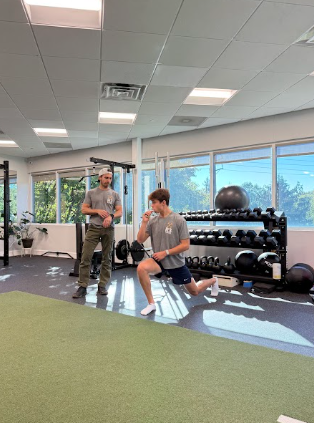
Strength and Conditioning for Injury Prevention and Performance
Strength is one of the best protections you have against injury. Tendons, muscles, and joints adapt to the demands placed on them. When those demands exceed your capacity, overuse injuries often follow.
R3 Physio builds strength and conditioning into your care so you do not have to start over with a separate trainer once rehab ends. Your program may include:
Resistance training to build strength in the muscles your sport depends on
Therapeutic exercise to correct limitations found during your assessment
Balance and proprioception training to improve control and stability
Neuromuscular re-education to retrain movement patterns
Mobility work to improve usable range of motion
Plyometrics to develop power and prepare you for sport
This is also where prehab fits in. If you are heading into a season, training for a race, or noticing early warning signs, addressing weak links now can help you avoid a larger setback later.
Return to Running and Return to Sport
Going back too soon is one of the most common reasons injuries recur. Feeling better is not the same as being ready. Your body needs adequate strength, control, and tolerance for the specific demands of your activity.
For runners, a gradual return to running plan combines strength work, form coaching, and a progressive build of volume and intensity. A running gait analysis can reveal mechanics that may be adding stress to your joints or tendons.
For athletes, return-to-sport progressions move from controlled exercises to jumping, cutting, and sport-specific drills. Return-to-sport testing then provides objective data on how your injured side compares and whether you are prepared for competition. That clarity helps you return with confidence instead of guessing.
Can Conservative Care Help You Avoid Surgery?
Not every injury requires surgery. For many musculoskeletal problems, a structured program of strengthening, movement correction, and manual care is a reasonable first step. Clinical guidelines for several conditions, including many knee, shoulder, and spine problems, support trying conservative care first when appropriate.
R3 Physio focuses on evidence-based conservative care that may help you avoid surgery. Some injuries do require surgical repair, and that outcome cannot always be predicted. If surgery is necessary, rehabilitation matters just as much. Prehab can prepare your body beforehand, and post-surgery rehab guides you through the stages of recovery so you rebuild strength safely.
What to Expect at Your First Visit
Starting physical therapy should feel clear and straightforward. Here is what your first visit at R3 Physio typically looks like:
A conversation about your history and goals: You explain your pain, your sport or activity, past injuries, and what you want to return to.
A full movement evaluation: Your DPT assesses strength, mobility, posture, and movement patterns, along with any testing relevant to your goals.
Initial treatment: Hands-on care and exercises often begin during the first session so you leave with direction.
A personalized plan: You learn what is driving your problem, what the plan includes, and how progress will be measured.
From there, each visit is one-on-one with your clinician. Your plan is adjusted as you improve so it continues to challenge you appropriately.
Why Choose R3 Physio for Performance Physical Therapy in Little Silver
Choosing a clinic is easier when you know what sets it apart. R3 Physio offers:
One-on-one sports physical therapy with no group sessions or shared care
Treatment overseen by a Doctor of Physical Therapy for every patient
Comprehensive movement assessments that look for root causes, not only symptoms
Advanced tools including dry needling, cupping, BFR, Graston, and soft tissue mobilization
Services for injury prevention and performance, not only rehab for the injured
Programs for adolescents, active adults, older adults, and competitive athletes
R3 Physio is based in Little Silver and serves nearby communities including Shrewsbury, Rumson, Fair Haven, Red Bank, and Middletown. You can learn more about our team, explore our full list of services, or visit the R3 Physio blog for more education on recovery and training.
If pain, an injury, or a performance plateau is keeping you from the activity you love, you do not have to figure it out alone. Visit R3 Physio to schedule your evaluation and start a plan built around your body, your sport, and your goals.